

First Conditional Worksheet – M-B1FCO002 / ESL EFL Classroom material
January 18, 2023
Reading Comprehension Worksheet – M-C2RC001 / ESL EFL Classroom material
January 19, 2023Transcript
Welcome to a Toony Blunt IBT practice listening test. You will hear a passage on the topic of the Native Americans. After you have listened to the passage, you will answer a series of multiple choice questions. Please listen carefully and choose the best answer for each question.
The American Indians, also known as Native Americans, are the indigenous peoples of North America. They have a rich history and culture that has been shaped by centuries of interaction with European colonizers and the United States government.
The arrival of European colonizers in the late 15th and early 16th centuries had a profound impact on the American Indian population. Many tribes were decimated by diseases brought over by the Europeans, and their lands were seized through a variety of means, including treaties and military force.
One of the most significant conflicts between American Indians and the United States government in the 19th century was the Indian Wars, a series of conflicts fought primarily in the Great Plains region. These wars resulted in the forced removal of many tribes from their ancestral lands, and the eventual confinement of most American Indians to reservations.
Despite centuries of suppression and forced assimilation, American Indian culture and traditions have survived. Many tribes have been able to maintain their languages, religions, and customs through the efforts of tribal leaders and community members.
Today, American Indian communities continue to face a variety of challenges, including poverty, lack of access to healthcare and education, and ongoing issues related to treaty rights and land ownership.
However, American Indian contributions to American culture are undeniable, from their contributions to the field of agriculture to the arts and crafts, which have been developed and passed down through generations. American Indian culture is also celebrated and cherished through many efforts such as the National Museum of the American Indian and powwows, traditional gatherings that include singing, dancing, and honoring tribal heritage.
1. How did the arrival of European colonizers affect the American Indian population?
A). It had a positive impact
B). It had a neutral impact
C). It had a profound impact
D). It didn’t have any effect
2. What was one of the most significant wars between American Indians and the United States government in the 19th century?
A). The Indian Wars
B). The American Civil War
C). The American Revolution
D). World War 1
3. How have American Indian culture and traditions survived despite centuries of suppression and forced assimilation?
A). They have been completely lost
B). They were passed down through generations and maintained by tribal leaders and community members
C). They were adopted by the colonizers
D). They were written in books
4. What are some of the current issues facing American Indian communities today?
A). Prosperity and good living conditions
B). Lack of access to healthcare and education and ongoing issues related to treaty rights and land ownership
C). Discrimination and marginalization
D). Lack of clean drinking water
5. How have American Indian contributions influenced modern American culture?
A). They have had no influence
B). They have had a significant influence in the field of agriculture and arts and crafts
C). They have had a minor influence
D). They have inspired people to wear feathers
6. What are some of the efforts being made to preserve and promote American Indian cultures and heritage?
A). There is no effort being made
B). Efforts such as the National Museum of the American Indian and powwows
C). Efforts such as forced assimilation and suppression.
D). All of the above
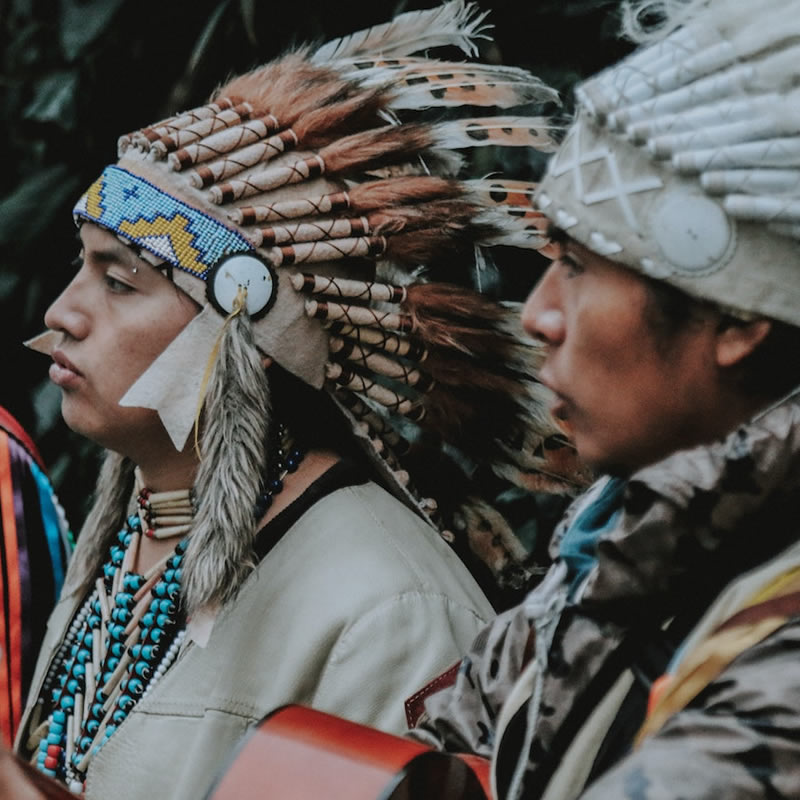
Play the game MIX. Have your students gather around in a tight circle and then say , “Mix!”. Have them then weave in, out and around eachother as fast as possible and then say, “Pairs!”. When you say pairs, the students put their hands on the shoulders of whomever is closest to them. Then have them ask the below questions to eachother and then repeat. (If you have enough students you can also say, “Trios”)
Questions:
- Do you have indigenous people in your country?
- Yes – How have they been affected by your government?
- No – Do you think it is right for governments to limit and supress their indigenous populations?
- If you were an indigenous person in your country or in someone else’s, how would you react to being discriminated against?

Related posts:
 Self-Driving Cars – C1 – TOEFL Listening Practice
 What is chatGPT? – C1 – TOEFL Listening Practice
 Become a Successful Youtuber – C2 – TOEFL Listening Practice
 SORA – The New Artificial Intelligence That Creates Movies From Text – C2 – TOEFL Listening
 7 Benefits of Coffee You May Not Know About – C1 – TOEFL Listening Practice
